
Leather Sofa Spec Glossary
Your complete A-to-Z guide to leather sofa terminology. Understand every spec, grade, and material before you buy — so you can shop with confidence and choose the perfect sofa for your home.
Why This Glossary Matters: When shopping for a leather sofa, you'll encounter a dizzying array of technical terms — from "full-grain aniline" to "kiln-dried hardwood" to "high-resilience foam." Without understanding these specs, it's easy to overpay for low-quality materials or miss out on features that matter most for your lifestyle.
This glossary breaks down every important leather sofa specification into plain English. Whether you're comparing full-grain leather sofas against top-grain options, or trying to understand the difference between foam cushions and down-filled cushions, you'll find clear definitions here.
Use this guide alongside our first leather sofa checklist and dimension chart to make a fully informed purchase decision.
Leather Grades & Types
Full-Grain Leather
The highest quality leather available. Full-grain leather is made from the outermost layer of the hide, retaining the natural grain and markings. It's not sanded or buffed, which means the natural fibers remain intact, making it the most durable and breathable option. Over time, full-grain leather develops a rich patina that enhances its character.
For a deeper dive, see our guide to full-grain leather sofas.
Top-Grain Leather
The second-highest quality leather. Top-grain leather has the outermost layer removed (sanded down) to eliminate imperfections, then a finish is applied. It's more uniform in appearance than full-grain but slightly less durable and breathable. Most mid-range leather sofas use top-grain leather.
Learn more in our top-grain leather sofas guide.
Split-Grain Leather
Made from the lower layers of the hide after the top grain has been separated. Split-grain leather is weaker and less breathable than full or top-grain. It's often coated with a polyurethane finish and embossed with a leather-like pattern to improve its appearance.
See our split-grain leather sofas guide for details.
Bonded Leather
A synthetic material made by mixing leather scraps and fibers with a polyurethane binder, then rolling it onto a fabric backing. Bonded leather is the lowest quality "leather" option. It's less durable, doesn't breathe, and often peels over time. However, it's significantly cheaper than genuine leather.
Read our bonded leather sofas guide to understand the trade-offs.
Faux Leather (PU Leather / Vinyl)
A completely synthetic material designed to mimic the look of leather. Faux leather is made from polyurethane (PU) or polyvinyl chloride (PVC) on a fabric backing. It's the most affordable option, easy to clean, and animal-free — but it doesn't breathe, can crack over time, and lacks the natural feel of real leather.
Explore our faux leather sofas guide for pros and cons.
Aniline Leather
A type of leather that's dyed with soluble dyes but not coated with a protective finish. This allows the natural grain and markings to show through, giving it a very natural look. However, aniline leather is highly susceptible to stains, fading, and water damage. It requires careful maintenance.
For care tips, see our leather sofa protection cream guide.
Semi-Aniline Leather
A middle ground between aniline and protected leather. Semi-aniline leather has a light protective coating that makes it more resistant to stains and fading while still retaining some of the natural look and feel of aniline leather. It's a popular choice for families.
Pigmented Leather (Protected Leather)
Leather with a durable, opaque finish that makes it highly resistant to stains, scratches, and fading. Pigmented leather is the most practical choice for households with children or pets. It's easy to clean and maintain, though it lacks the natural feel of aniline leather.
Learn about care in our daily cleaning routine guide.
Patina
The natural sheen and color change that develops on high-quality leather over time due to exposure to oils, sunlight, and use. Patina is a desirable characteristic of full-grain leather and is a sign of authentic, high-quality material.
Frame Materials
Hardwood Frame
The gold standard for sofa frames. Hardwood frames are made from dense woods like oak, maple, or beech. They're durable, resistant to warping, and can last for decades. A quality hardwood frame should be kiln-dried to prevent moisture-related issues.
See our hardwood sofa frames guide for more details.
Kiln-Dried Wood
Wood that has been dried in a kiln to reduce its moisture content to a specific level (usually 6–8%). This process prevents the wood from warping, cracking, or shrinking after manufacturing. Kiln-dried wood is a hallmark of quality furniture.
Learn more in our kiln-dried wood frames guide.
Plywood Frame
An engineered wood product made from thin layers of wood veneer glued together. Plywood frames are less expensive than hardwood but can still be durable if high-quality. However, lower-grade plywood may delaminate or warp over time.
Read our plywood sofa frames guide for the pros and cons.
Engineered Wood Frame
A broad category that includes plywood, particleboard, and MDF (medium-density fiberboard). Engineered wood frames are affordable but generally less durable than solid hardwood. Particleboard is the lowest quality and prone to sagging.
See our engineered wood frames guide for comparisons.
Metal Frame
Sofas with metal frames (usually steel or aluminum) are exceptionally strong and durable. They're often used in modern or industrial-style sofas. Metal frames don't warp or crack, but they can be heavier and more expensive than wood.
Explore our metal sofa frames guide.
Cushion & Filling
High-Resilience (HR) Foam
A type of polyurethane foam with a high density and rebound rate. HR foam is more durable and retains its shape better than standard foam. It's the most common filling for quality sofa cushions. Density is measured in pounds per cubic foot (PCF) — higher is better.
Learn more in our high-resilience foam sofas guide.
Memory Foam
A viscoelastic foam that conforms to your body shape and slowly returns to its original form. Memory foam cushions provide excellent pressure relief and comfort, but they can retain heat and may feel too soft for some users.
See our memory foam leather sofas guide.
Down-Filled Cushions
Cushions filled with natural down feathers (usually from ducks or geese). Down-filled cushions are incredibly soft and comfortable but require frequent fluffing and may trigger allergies. They're often blended with foam for added support.
Explore our down-filled leather sofas guide.
Spring Cushions
Cushions that contain coil springs wrapped in foam or fabric. Spring cushions provide excellent support and bounce, and they resist sagging better than foam-only cushions. They're often found in high-end sofas.
Read our spring cushion leather sofas guide.
Foam Density
The weight of foam per cubic foot, measured in pounds (e.g., 1.8 lb, 2.5 lb). Higher density foam is more durable and supportive. For sofa seat cushions, a density of 2.0–2.5 lb is recommended for regular use.
Learn more in our foam cushion leather sofas guide.
Feather Blend
A cushion filling that mixes down feathers with foam or polyester fiber. Feather blends offer the softness of down with the support and durability of foam. They require less fluffing than pure down cushions.
Polyester Fiber Fill
A synthetic filling made from polyester fibers. It's affordable and soft but compresses quickly and loses its shape over time. Polyester fill is often used in back cushions or as a blend with foam.
Hardware & Finish
Nailhead Trim
Decorative metal studs or nails applied along the edges of a sofa. Nailhead trim adds a classic, elegant look and can be made from brass, nickel, or other metals. It's often found on traditional or Chesterfield-style sofas.
See our leather sofa nailhead trim guide.
Tufting
A technique where fabric or leather is pulled inward and secured with buttons or stitching to create a patterned, textured surface. Tufting can be diamond, biscuit, or channel style. It adds visual interest and can improve cushion support.
Explore our leather sofa tufting styles guide.
Stitching Details
The type and quality of stitching on a leather sofa. Common types include single-needle, double-needle, and saddle stitching. Quality stitching should be even, tight, and free of loose threads. Contrast stitching can add a decorative element.
Learn more in our leather sofa stitching details guide.
Sofa Legs & Feet
The supports at the base of the sofa. They can be made from wood, metal, or plastic. Wood legs are common in traditional and mid-century styles, while metal legs are typical in modern and industrial designs. Leg height affects the sofa's overall height and visual weight.
See our leather sofa legs and feet guide.
Armrest Designs
The style and shape of a sofa's armrests. Common types include rolled arms, track arms, English arms, and flared arms. The armrest design significantly affects the sofa's overall style and comfort.
Read our leather sofa armrest designs guide.
Construction Terms
Corner Blocking
Triangular wooden blocks glued and screwed into the corners of a sofa frame to reinforce joints. Corner blocking is a sign of quality construction and helps prevent the frame from racking or twisting.
Joinery
The method used to connect pieces of wood in a sofa frame. Common types include dowel joints, mortise-and-tenon joints, and dovetail joints. Quality joinery (like mortise-and-tenon) is stronger and more durable than simple butt joints or staples.
Eight-Way Hand-Tied Springs
A traditional spring system where coil springs are tied together in eight directions with twine. This provides excellent support and durability. It's a hallmark of high-end furniture but is labor-intensive and expensive.
Sinuous Springs (Zig-Zag Springs)
A modern spring system using S-shaped wire springs attached to the frame. Sinuous springs are less expensive than hand-tied springs but still provide good support. They're common in mid-range sofas.
Webbing
A suspension system using woven strips of rubber or elastic material stretched across the frame. Webbing provides a flexible, supportive base for cushions. It's often used in combination with springs.
Frame Gauge
The thickness of the wood used in a sofa frame, measured in gauges. Lower gauge numbers indicate thicker, stronger wood. A quality sofa frame typically uses 1.25-inch or thicker hardwood.
Care & Maintenance Terms
Conditioning
The process of applying a leather conditioner to nourish and protect leather. Conditioning replenishes natural oils, prevents drying and cracking, and maintains suppleness. It should be done every 6–12 months.
See our deep conditioning guide.
Patina (Care Context)
While patina is a desirable aging effect, it's important to distinguish it from damage. Proper care — including regular cleaning and conditioning — helps develop an even, attractive patina rather than unsightly wear.
Sun Fade Protection
Measures taken to prevent leather from fading due to UV exposure. This includes using window treatments, applying UV-protectant products, and rearranging furniture to avoid direct sunlight.
Learn more in our sun fade protection guide.
Humidity Control
Maintaining appropriate indoor humidity levels (typically 40–60%) to prevent leather from drying out or growing mold. Excessive dryness causes cracking, while excessive moisture can lead to mildew.
Read our humidity control guide.
Cushion Rotation
The practice of regularly rotating and flipping sofa cushions to ensure even wear. This prevents permanent indentations and extends the life of the cushions.
See our cushion rotation guide.
Quick Comparison Table: Leather Grades
| Leather Type | Durability | Breathability | Maintenance | Price Range | Best For |
|---|---|---|---|---|---|
| Full-Grain | Excellent | Excellent | Moderate | $1,500–$4,000+ | Luxury, long-term investment |
| Top-Grain | Very Good | Good | Easy | $800–$2,500 | Families, everyday use |
| Split-Grain | Fair | Poor | Easy | $500–$1,200 | Budget-conscious buyers |
| Bonded | Poor | Very Poor | Easy | $300–$800 | Short-term, low-traffic areas |
| Faux Leather | Fair | Very Poor | Very Easy | $200–$700 | Rentals, dorms, pets |
Recommended Leather Sofas for Informed Buyers
⚠️ AFFILIATE DISCLOSURE: This website contains affiliate links. As an affiliate Associate, we earn from qualifying purchases. If you make a purchase through these links, we may receive a small commission at no additional cost to you. Read our full affiliate policy.

POLY & BARK Essex 89” Full-Grain Italian Leather Sofa – Tufted Back, Feather-Down Comfort, Solid Wood Frame, Cognac Tan
Check price on Amazon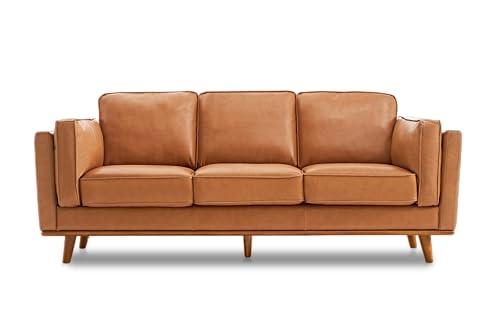
Valencia Artisan Full Leather Sofa 88” - Pure Full Italian Nappa Leather Couch for Living Room Furniture, Solid Wood Accent, Ultimate Comfort, Cognac Tan
Check price on Amazon
Valencia Artisan Full Leather Sofa - Pure Full Italian Nappa Leather Couch, Solid Wood Accent, Ultimate Comfort (Cognac, L-Shape Sectional)
Check price on Amazon
POLY & BARK Capa 96.5" Sofa – Chocolate Brown Full-Grain Pure-Aniline Italian Leather, Boxy Modern Design, Feather-Fiber Cushions, Solid Wood Frame
Check price on Amazon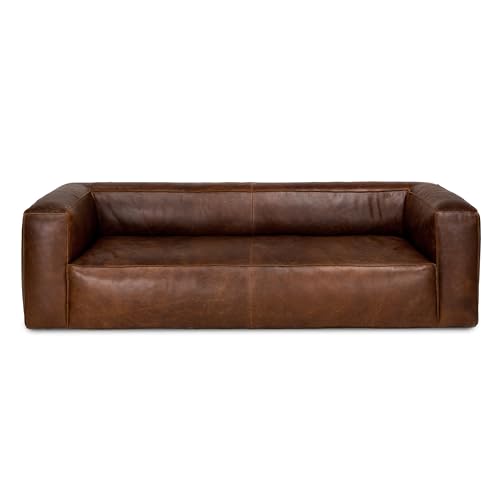
Valencia Graz Leather Wide Sofa 92" | Premium Full Semi-Aniline Leather | Modern Wide Couch with Unique Variations, Legless Design for Living Room, Chocolate
Check price on Amazon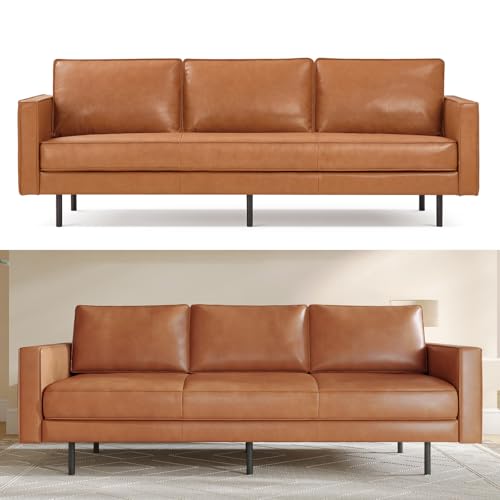
Valencia Varese 90" Full Leather Couch Cognac Tan Brown- Italian Nappa Leather Modern Cloud Couch for Living Room/Apartment Furniture
Check price on Amazon