
Leather Sofa Pet Protection: Complete Guard & Care Guide
Keep your leather sofa pristine while sharing your home with dogs and cats. Learn scratch prevention, pet-friendly covers, cleaning strategies, and durable leather choices that survive real life with pets.
Quick Answer: How Do You Protect a Leather Sofa from Pets?
The most effective leather sofa pet protection combines three layers: a durable leather type (full-grain or top-grain with a protective finish), physical barriers such as fitted covers or throw blankets in high-traffic spots, and a consistent maintenance routine using a structured leather sofa conditioning schedule plus prompt cleanup of claws, spills, and pet hair. Trim your pet's nails every 2–3 weeks, and use edge guards on the arms and front rails where cats and dogs scratch most.
Why This Guide Matters: A leather sofa is a significant investment — typically $800–$2,500 for quality full-grain or top-grain models. For pet owners, the fear of scratches, claw marks, accidents, and embedded pet hair is real. This guide walks you through exactly how to protect your leather sofa from pets without sacrificing comfort or style, so you can enjoy both your furniture and your furry family members.
Understanding How Pets Damage Leather Sofas
Before choosing a protection strategy, it helps to understand exactly what you are defending against. Pet damage to leather sofas generally falls into four categories, each requiring a different approach.
1. Claw Scratches and Punctures
Cats are the primary culprits, but dogs also scratch leather when jumping up or "digging" before lying down. Claws create surface scuffs on finished leather and can puncture softer aniline or semi-aniline hides. The key insight: finished leather resists scratches far better than unprotected aniline leather. If you are still choosing your sofa, review the differences in full-grain vs top-grain leather, since top-grain typically carries a protective finish that handles claws better than raw full-grain. For budget-conscious pet owners, bonded vs genuine leather sofas explains why bonded leather is a poor long-term choice around pets.
2. Pet Hair and Dander Buildup
Short pet hair weaves into stitching and crevices. Over time it acts like sandpaper, accelerating wear on the leather surface. Regular removal is essential — see our leather sofa embedded dirt extraction guide for the correct tools and technique.
3. Accidents, Drool, and Spills
Urine, drool, and water bowl splashes are acidic and can stain or dry out leather if left unattended. Fast response matters more than any product. Our leather sofa liquid spill cleanup guide covers the exact steps for pet-related accidents.
4. Odor Absorption
Leather is porous on the surface. Pet odors can settle into cushions and seams. If your sofa already has a smell, start with our leather sofa odor neutralizing method before applying any protective treatment.
Best Leather Types for Pet Owners Compared
Not all leather handles pets equally. This comparison table shows how the most common leather grades perform against claws, accidents, and maintenance demands.
| Leather Type | Scratch Resistance | Stain & Liquid Resistance | Maintenance Level | Pet Suitability |
|---|---|---|---|---|
| Full-Grain (finished) | High | Moderate | Moderate | Excellent |
| Top-Grain | High | High | Low | Excellent |
| Split-Grain | Moderate | Moderate | Moderate | Good |
| Bonded Leather | Low | Low | High | Poor |
| Faux / PU Leather | Moderate | High | Low | Good (short-term) |
💡 Pro Tip: If you are buying new and own pets, prioritize top-grain leather with a protected finish. It offers the best balance of durability, cleanability, and price — and it resists claw marks significantly better than unfinished aniline hides.
Practical Leather Sofa Pet Protection Strategies
Protection works best as a layered system. No single product solves everything, but combining physical barriers, behavioral training, and surface care will keep your sofa in excellent condition for years.
Layer 1: Physical Barriers
- Fitted leather sofa covers — The most reliable defense for sofas in daily pet contact. Choose machine-washable covers that fit snugly so claws cannot reach leather underneath.
- Throw blankets on seating spots — Place a folded blanket on the cushion your pet claims most. Remove and wash weekly.
- Edge guards for arms and rails — These attach to the front edge and armrests where pets launch themselves up. See our leather sofa edge guards guide for fitment and options.
- Scratch-resistant throws at corners — Cats specifically target corners. A tightly tucked throw at each corner blocks the behavior without changing your design.
Layer 2: Behavioral Management
- Trim nails every 2–3 weeks — Dull claws cause far less damage. This is the single most effective long-term protection step.
- Provide alternative scratching surfaces — Place a cat tree or scratching post directly beside the sofa. Redirect rather than punish.
- Train "off" and "place" commands — Consistent training reduces jumping and digging on cushions.
- Use a pet deterrent spray on non-leather barriers only — Never apply directly to leather; instead, apply to the cover fabric.
Layer 3: Surface Care and Maintenance
- Condition every 3–6 months — Conditioned leather is more flexible and resists cracking from pet hair friction. Follow our leather sofa conditioning schedule.
- Polish lightly once or twice a year — A proper leather sofa polishing guide restores sheen and adds a micro-barrier.
- Vacuum weekly with a brush attachment — Removes hair before it embeds. Pair with our leather sofa dust barrier tips for best results.
- Address sticky residue immediately — Drool and treat residue harden and attract dirt. See leather sofa sticky residue removal.
Layer 4: Quick Response to Damage
- Seam separation — If seams split from pet tugging, consult our leather sofa seam repair guide before the gap widens.
- Tears and punctures — Small tears should be patched immediately with a leather sofa tear patch guide or a leather patching kit. Our leather sofa leather patching guide covers color matching.
- Water damage from spills or accidents — Act within minutes. Our leather sofa water damage restoration guide explains the drying and reconditioning process.
- Faded or scratched surfaces — For deeper restoration, see leather sofa surface refinishing.
⚠️ Warning: Never use harsh household cleaners, bleach, alcohol, or abrasive scrubbing pads on leather. These strip the finish that protects against pet damage in the first place, creating a worse problem than the original spill.
Best Pet Protection Products & Pet-Friendly Leather Sofas
⚠️ AFFILIATE DISCLOSURE: This website contains affiliate links. As an affiliate Associate, we earn from qualifying purchases. If you make a purchase through these links, we may receive a small commission at no additional cost to you. Read our full affiliate policy.
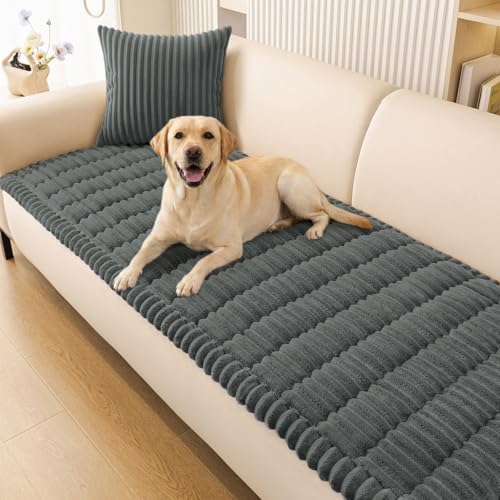
Smiry Couch Cover for Dogs, Non Slip Washable Sofa Protector for Pets | Soft Furniture Cover for Fabric Couches, Cozy Protect Against Fur, Dirt & Messes, Pet Friendly, 27.6"x59"
Check price on Amazon
Smiry Waterproof Couch Cover for Dogs, Washable Non Slip Plush Protector | Waterproof Barrier, Plush Flannel, Non Slip Backing, Pet Hair & Scratch Protection, Fits 3 Seat Sofa & Couch (36" x 71")
Check price on Amazon
hyha Couch Cover for Dogs, Washable Non Slip Plush Flannel Sofa Protector | Thick Flannel, Non Slip Backing, Pet Hair & Scratch Protection, Fits 2-3 Cushion Sofa (27.6" x 59")
Check price on Amazon
Krifey Waterproof Couch Covers for Dogs, Non Slip Sofa Protector for Pets | Thick Soft Flannel, TPU Barrier, Washable, Pet Hair & Stains Protection, Fits Leather & Fabric 2-Seater / Loveseat Sofa, 59"
Check price on Amazon
FWBBG Couch Covers for Sectional Sofa, Sectional Couch Covers for Dogs Pets | 1PC 35”x83” Beige White Velvet Non Slip L Shaped Sofa Covers Washable for 3 Cushion Couch, Sofa Protection Against Pet Hair
Check price on Amazon
Non-Slip Headrest Cover for Recliner Sofa Theater Seat, Gray | Durable Faux Leather, Pet & Kid Stain Protection, Waterproof, 17"W×27"L, Quick Install, Wipe Clean, Fit Sofa & Loveseat
Check price on Amazon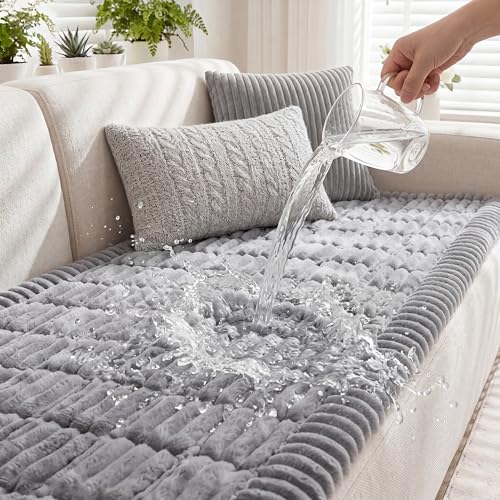
Fixwal Waterproof Flannel Dog Couch Cover, 27.6" x 59", Light Gray | Integrated TPU Barrier, Non-Slip Backing, Machine Washable, Pet Friendly, Easy Clean Pet Hair, Soft Sofa Cushion Protector
Check price on Amazon
Ameritex Waterproof Dog Bed Blankets Cover for Bed Couch Sofa Reversible | Soft Washable Pet Blankets,Furniture Protector for Dogs Cats Couch Cover for Dogs (30x70 Inches, Grey+Dark Grey)
Check price on AmazonChoosing a Pet-Friendly Leather Sofa Before You Buy
Prevention starts with the right purchase. If you are still shopping, these pointers will save you years of frustration.
Prioritize Finish Over Brand
A protective topcoat matters more than the label. Finished top-grain and finished full-grain hides repel claws and wipe clean easily. To compare real-world durability, browse highest-rated leather sofas and check whether each model specifies a protected finish.
Favor Tight, Firm Cushions
Loose down-filled cushions collect pet hair and compress under repeated jumping. If you already own a down sofa and need to replace worn cushions, see leather sofa cushion replacement. And if the cushion fill itself has broken down, our leather sofa batting replacement guide can restore shape and support.
Consider Layout and Pet Access
Reclining mechanisms are vulnerable to pets crawling underneath. Read recliner vs stationary leather sofas before buying if your pets frequently explore under furniture. If you already own a recliner and something has jammed, our leather sofa recliner mechanism repair guide covers the common failure points.
Match Size to Your Household
Smaller sofas mean pets crowd the same spots repeatedly, concentrating wear. Sectionals distribute wear but increase surface area to protect. Compare options in sectional vs standard leather sofas.
Pet-Friendly Leather Sofa Options Worth Considering
The right sofa reduces the need for constant protection. These styles and models are worth reviewing if your household includes dogs or cats.
- Modular and sectional designs — Replaceable individual units mean a single scratched section can be swapped without replacing the entire sofa.
- Power reclining models with covered mechanisms — Enclosed recliner housing prevents pets from crawling underneath. See leather power reclining sofa with lumbar support for an ergonomic example.
- Compact apartment-friendly options — Less surface area means less to defend. Browse apartment size leather sofa for space-efficient choices.
- Faux leather alternatives for high-risk homes — Where scratching is unavoidable, a faux leather convertible sofa bed offers a lower-cost sacrificial option.
- Curved-back designs — Curved backs often use tighter upholstery that resists claw penetration. See curved back leather sofa.
Frequently Asked Questions About Leather Sofa Pet Protection
Can leather sofas survive living with cats?
Yes, with the right preparation. Cats damage leather mainly through scratching and puncturing. Finished top-grain or finished full-grain leather, combined with trimmed nails, corner covers, and a scratching post placed next to the sofa, makes cat ownership and leather furniture entirely compatible. Avoid bonded and unfinished aniline leather if you have cats.
Is leather or fabric better for pet owners?
Leather generally wins for hair and odor, since hair sits on the surface and wipes away. Fabric traps hair and holds odors. However, leather is more vulnerable to claw punctures. For a full breakdown, see leather vs fabric sofas.
How often should I condition a leather sofa with pets?
Every three to six months in a pet household, versus every six to twelve months in a pet-free home. Pet hair acts as an abrasive, so more frequent conditioning keeps the surface supple and resilient. Follow the timeline in our leather sofa conditioning schedule.
What should I do if my dog scratches the leather?
For surface scuffs, a light conditioning and polishing routine often minimizes appearance. For actual tears, patch immediately using a color-matched leather patch kit — see leather sofa tear patch guide. For larger areas, professional leather sofa surface refinishing may be required.
Do pet covers actually protect leather sofas?
Yes, when they fit properly. Loose covers slide and expose leather at the edges. Choose snug-fitting, machine-washable covers and tuck them securely. Combine covers with edge guards at the arms and front rail for the highest-protection setup.
How do I remove pet hair from a leather sofa?
Use a rubber glove or a soft brush attachment on a vacuum. Wipe in one direction to gather hair rather than spread it. For deeply embedded hair in seams, follow the technique in our leather sofa embedded dirt extraction guide.
Can I restore an antique leather sofa damaged by pets?
In many cases, yes. Older leather often responds well to careful restoration, especially when the frame is still solid. See heirloom leather sofa restoration and leather sofa wood trim restoration for the full process.
Training Your Pet to Respect the Sofa
Protection products handle the surface. Training handles the behavior. Both matter equally.
- Consistency beats intensity. A calm, immediate "off" every single time works better than occasional stern corrections.
- Reward the alternative. Place a comfortable pet bed beside the sofa and reward your pet for choosing it.
- Never punish after the fact. Pets cannot connect delayed correction to the earlier action, and it damages trust.
- Use barriers during training. While your pet is learning, keep a cover on the sofa so mistakes do not become permanent marks.
- Address anxiety. Destructive scratching often signals stress or boredom. More exercise and enrichment reduce the behavior at the source.
💡 Pro Tip: If your pet is chewing or scratching specifically at the corners, pair training with our leather sofa child-proofing techniques. Many of the same edge and corner solutions apply to both toddlers and pets.
Seasonal and Environmental Factors
Pet damage does not happen in isolation. Environment plays a large role in how vulnerable your leather becomes.
Humidity and Dryness
Dry indoor air makes leather brittle and more prone to cracking under claw pressure. In winter, run a humidifier to keep indoor humidity between 40 and 60 percent. This single change dramatically improves leather resilience in pet homes.
Shedding Seasons
Spring and fall shedding cycles deposit far more hair on your sofa. Increase vacuuming frequency during these periods and consider temporary covers on the most-used seating positions.
Sunlight Exposure
UV light fades leather and dries it out. Combined with pet wear, sun-exposed sections deteriorate faster. Rotate cushions and reposition the sofa if possible to distribute exposure evenly.
Recommended Maintenance Schedule for Pet Households
Consistency is what separates a sofa that lasts two years from one that lasts fifteen. Use this schedule as your baseline.
| Frequency | Task | Why It Matters |
|---|---|---|
| Daily | Quick wipe of high-contact areas with a dry microfiber cloth | Removes drool, dander, and loose hair before it embeds |
| Weekly | Vacuum with soft brush attachment; wash covers | Prevents hair from acting as an abrasive on the surface |
| Monthly | Inspect seams, arms, and front rails for early damage | Catches small issues before they require major repair |
| Every 3–6 Months | Condition with a quality leather conditioner | Maintains flexibility and adds a protective layer |
| Every 6–12 Months | Light polish to restore sheen and barrier protection | Refreshes the finish that resists claws and stains |
| Annually | Deep clean and full condition; check recliner mechanisms if applicable | Resets surface condition and prevents hidden damage |
Common Mistakes Pet Owners Make with Leather Sofas
- Buying bonded leather to save money. Bonded leather peels and cracks quickly even without pets. With pets, it fails even faster. See bonded vs genuine leather sofas.
- Ignoring a small tear. Pet tears grow. A quick patch now prevents a full panel replacement later.
- Over-wetting the surface when cleaning. Excess water penetrates seams and causes long-term damage. Always wring cloths until barely damp.
- Skipping conditioning because "it looks fine." Leather dries out invisibly. By the time cracking appears, the damage is done.
- Letting pets on the sofa immediately after conditioning. Allow the conditioner to absorb fully — usually several hours — before normal use resumes.
- Using the wrong products. Household cleaners, vinegar solutions, and abrasive pads cause more harm than the original problem.
Ready to Pet-Proof Your Leather Sofa?
You now have the complete framework: the right leather type, layered physical barriers, behavioral training, and a consistent care schedule. The final step is choosing the products that fit your home. Browse our recommended pet protection gear and pet-friendly leather sofas above.
View Recommended Products ↑