
Leather Sofa Conditioning Schedule: The Complete Timing Guide
Discover exactly when and how often to condition your leather sofa based on climate, usage patterns, and leather type. Keep your investment supple and beautiful for decades with our expert conditioning timeline.
Learn the ScheduleWhy Conditioning Timing Matters: Leather is skin—it needs moisture to stay supple and prevent cracking. But over-conditioning clogs pores and attracts dirt, while under-conditioning leads to dryness and permanent damage. This guide gives you a precise, actionable schedule tailored to your specific situation. Whether you own full-grain or top-grain leather, the principles here will protect your investment.
The Universal Conditioning Baseline
For most leather sofas in typical indoor environments, the gold standard is every 6 to 12 months. This range accounts for the natural oils in leather that gradually deplete through use, cleaning, and exposure to indoor heating and cooling systems. If you're unsure where to start, begin with a twice-yearly schedule—once in spring and once in autumn—then adjust based on what you observe.
New leather sofas are a special case. Fresh leather from the tannery often arrives with a protective factory finish and adequate natural oils. Wait at least 6 months before the first conditioning. Conditioning too early can interfere with the leather's natural patina development and may cause uneven absorption. For those who own bonded or genuine leather sofas, note that bonded leather has a polyurethane coating that resists conditioning—it may need less frequent application or none at all depending on the manufacturer.
Quick Reference: Base Conditioning Frequency
- Standard indoor sofa: Every 6–12 months
- New sofa (first year): Wait 6 months, then assess
- Lightly used (guest room): Every 12 months
- Heavily used (daily family sofa): Every 4–6 months
- Bonded leather: Every 12 months or per manufacturer guidance
How Climate Changes Your Schedule
Climate is the single biggest variable in conditioning frequency. Leather responds to humidity—or the lack of it—by either releasing or absorbing moisture. Here's how different environments affect your schedule:
Dry Climates (Desert, High Altitude, Cold Winters)
Low humidity strips moisture from leather rapidly. If you live in an arid region or experience harsh winters with indoor heating, your leather sofa may need conditioning every 3 to 4 months. Indoor heating systems are particularly damaging because they remove moisture from the air. Consider using a humidifier in the room to extend the time between conditioning sessions. For sofas in these conditions, our conditioning schedule guide recommends closer monitoring and a proactive approach.
Humid Climates (Tropical, Coastal, Rainy Seasons)
High humidity can actually keep leather supple longer, but it also invites mold and mildew. In these environments, condition every 8 to 12 months, but focus on using a light, non-greasy conditioner that won't trap moisture. Ensure good air circulation around the sofa. If you notice a musty smell, address it immediately with odor neutralizing techniques before conditioning.
Moderate Climates (Four Distinct Seasons)
If you experience all four seasons without extreme dryness or humidity, stick to the baseline every 6 to 9 months. The transition from summer to winter and winter to spring are ideal times to condition, as these are periods when indoor humidity fluctuates most.
Air-Conditioned or Heated Environments
Constant climate control creates dry indoor air year-round. Even in a moderate climate, if your sofa sits in a room with central air or heating running frequently, treat it like a dry climate and condition every 4 to 6 months.
Usage Intensity & Conditioning Frequency
How you use your leather sofa directly impacts how quickly its natural oils deplete. Body oils, friction from sitting, and exposure to sunlight all accelerate the need for conditioning.
Heavy Daily Use (Family Living Room)
A sofa that sees daily use by multiple people—especially children and pets—needs conditioning every 4 to 6 months. The friction from constant sitting, combined with body oils and potential spills, breaks down the leather's surface more quickly. If you have pets, also review our leather sofa pet protection guide to minimize damage between conditioning sessions.
Moderate Use (Couple's Main Sofa)
Used daily by one or two adults without pets or children, condition every 6 to 9 months. This is the most common scenario and aligns with the universal baseline.
Light Use (Formal Living Room, Guest Room)
A sofa that's rarely sat on can go 12 months or longer between conditioning. However, don't neglect it entirely—leather still dries out over time even without use, especially in heated or air-conditioned rooms. An annual conditioning keeps it in top shape.
Sunlight Exposure
Direct sunlight is leather's enemy. UV rays fade color and dry out the surface. If your sofa sits in direct sun for part of the day, increase conditioning frequency by 50%—so a standard 6-month schedule becomes every 3 to 4 months. Consider using curtains or blinds during peak sun hours to protect your investment.
Leather Type & Conditioning Needs
Not all leather is created equal. The type of leather your sofa uses determines how often it needs conditioning—and in some cases, whether it needs conditioning at all.
Full-Grain Leather
The highest quality leather retains its natural pores and oils. It's the most responsive to conditioning and benefits from a regular schedule of every 6 to 12 months. Over time, full-grain leather develops a rich patina that conditioning helps enhance. For a deeper understanding of this premium material, see our full-grain vs top-grain leather comparison.
Top-Grain Leather
Top-grain leather has the top layer sanded away to remove imperfections, then a protective finish is applied. It's slightly less porous than full-grain, so it needs conditioning every 6 to 12 months. However, the surface finish means conditioners sit more on top than absorb deeply—use a lighter application.
Split-Grain Leather
Split-grain leather is the lower layer of the hide, often finished with a polyurethane coating to mimic top-grain. It's less breathable and absorbs conditioner poorly. Condition every 8 to 12 months with a product designed for finished leather.
Bonded Leather
Bonded leather is made from leather scraps bonded together with polyurethane. It has a plastic-like surface that doesn't absorb traditional conditioners. Many bonded leather sofas should not be conditioned at all—check your manufacturer's instructions. If conditioning is recommended, do so every 12 months with a product specifically formulated for bonded leather. For more on identifying your sofa's leather type, see our guide on bonded vs genuine leather sofas.
Faux Leather (PU Leather)
Faux leather is entirely synthetic and does not benefit from traditional leather conditioners. Instead, clean it with a damp cloth and mild soap. Conditioning products can damage the surface. If you own a faux leather convertible sofa bed or similar, skip the conditioner and focus on gentle cleaning.
Aniline and Semi-Aniline Leather
These are premium, minimally processed leathers with little to no surface coating. They absorb conditioner readily and may need more frequent conditioning—every 4 to 6 months. They're also more susceptible to stains, so consider pairing conditioning with a protective cream.
Signs Your Sofa Needs Conditioning Now
Even with a schedule, leather can tell you when it needs attention. Watch for these indicators that it's time to condition, regardless of when you last did it:
- Dryness or dullness: The surface looks matte or chalky instead of having a subtle sheen.
- Stiffness: The leather feels rigid rather than supple when you press it.
- Fading: Color appears washed out or lighter in areas of heavy use or sun exposure.
- Fine lines or cracks: Small fissures are appearing, especially along seams and creases. Address immediately—this is a sign of serious moisture loss. If cracks have already formed, you may need leather patching before conditioning.
- Increased dust: Dry leather generates more dust as surface fibers break down. Learn more about managing this with our dust barrier tips.
- Water absorption: If a drop of water soaks in immediately instead of beading, the protective oils are depleted.
If you notice multiple signs, don't wait—condition within the week. The sooner you restore moisture, the better the results. For a comprehensive understanding of leather care, explore our full conditioning schedule guide.
Step-by-Step Conditioning Process
Conditioning isn't just about timing—it's about doing it correctly. Follow these steps for best results:
- Clean first: Never condition over dirt. Use a leather cleaner or a damp cloth to remove surface dust and grime. For deep cleaning, refer to our embedded dirt extraction guide.
- Test in a hidden area: Apply a small amount of conditioner to the back or underside of the sofa. Wait 24 hours to check for discoloration or adverse reactions.
- Apply conditioner: Use a soft, lint-free cloth or sponge. Apply a small amount—a little goes a long way. Work in circular motions, one section at a time.
- Let it absorb: Allow the conditioner to sit for 10–15 minutes. It should soak in, not sit on the surface.
- Buff off excess: Use a clean, dry cloth to gently buff away any excess. The leather should feel soft, not greasy.
- Allow to dry: Keep the sofa out of direct sun and away from heat sources for several hours.
For a detailed walkthrough, see our leather sofa polishing guide, which covers conditioning and polishing in depth.
Pro Tips for Best Results
- Condition in the morning so the sofa has all day to dry.
- Avoid over-applying—more conditioner isn't better.
- Use products specifically made for leather, not generic moisturizers.
- If your sofa has wood trim, avoid getting conditioner on the wood.
Seasonal Conditioning Calendar
Here's a simple calendar approach for moderate climates with four seasons. Adjust based on your specific climate and usage.
Spring (March–May)
Condition: Yes
Why: Transition from winter heating to open windows. Leather may be dry from indoor heating.
Summer (June–August)
Condition: Assess
Why: High humidity may keep leather supple. If air conditioning runs constantly, condition mid-summer.
Autumn (September–November)
Condition: Yes
Why: Prepare for winter heating. Restore moisture before dry indoor air sets in.
Winter (December–February)
Condition: Monitor
Why: Indoor heating strips moisture. If you conditioned in autumn, you may not need to condition again, but check for dryness.
If you live in a dry climate, add an extra conditioning session in mid-winter. If you live in a humid climate, you may skip the summer assessment or use a very light conditioner.
Common Conditioning Mistakes to Avoid
- Over-conditioning: Applying too often clogs pores, attracts dirt, and can cause a greasy buildup. Stick to the schedule unless you see clear signs of dryness.
- Using the wrong product: Not all conditioners work on all leather types. Using a heavy conditioner on aniline leather can darken it permanently. Using any conditioner on faux leather can ruin it.
- Skipping cleaning: Conditioning over dirt traps abrasive particles that cause premature wear.
- Applying in direct sunlight: The heat causes the conditioner to dry too quickly and absorb unevenly.
- Ignoring manufacturer instructions: Some leathers have specific care requirements. Always check the tag or manual.
- Conditioning bonded leather: Many bonded leathers should not be conditioned at all. When in doubt, test a hidden area or consult the manufacturer.
- Using too much product: A little goes a long way. Excess conditioner sits on the surface and attracts dust.
If you've made mistakes and your leather is showing damage, you may need restoration. Explore our surface refinishing guide for advanced repair techniques. For minor issues, sticky residue removal and proper cleaning can often resolve problems.
Frequently Asked Questions
Can I condition my leather sofa too often?
Yes. Over-conditioning is a common mistake. It clogs the leather's pores, creating a sticky surface that attracts dust and dirt. It can also cause the leather to become overly soft and lose its shape. Stick to the recommended schedule unless you see clear signs of dryness.
What's the best time of year to condition a leather sofa?
Spring and autumn are ideal in moderate climates. These transitions prepare the leather for the extreme dryness of winter heating and the humidity of summer. In dry climates, condition before and during winter. In humid climates, condition in spring and autumn.
Do I need to condition a new leather sofa?
Not immediately. New leather comes with natural oils and factory finishes. Wait at least 6 months before the first conditioning to allow the leather to settle and develop its initial patina. Conditioning too soon can interfere with this process.
How do I know if my leather sofa needs conditioning?
Look for dryness, dullness, stiffness, fading, or fine cracks. The water test is also useful: if a drop of water soaks in immediately instead of beading, the protective oils are depleted and it's time to condition.
Can I use olive oil or coconut oil to condition my leather sofa?
No. Household oils can go rancid, attract pests, and damage the leather's finish. Always use a product specifically formulated for leather care. These products are pH-balanced and designed to penetrate and protect without causing harm.
What if I have pets or children?
Increase conditioning frequency to every 4–6 months. Also, use protective covers when possible, and address spills immediately with our liquid spill cleanup guide. For pets, see our pet protection guide.
Your Leather Sofa Deserves a Schedule
Conditioning your leather sofa isn't complicated, but timing is everything. By following the guidelines in this schedule—adjusting for your climate, usage, and leather type—you'll keep your sofa supple, protected, and beautiful for years. Remember: the best schedule is one you'll actually follow. Mark your calendar, set a reminder, and make conditioning a regular part of your home care routine.
Whether you own a traditional leather sofa set or a power reclining sofa, the principles remain the same. Consistent care preserves your investment and ensures your leather sofa remains the centerpiece of your living room for decades.
Recommended Leather Conditioners & Care Products
⚠️ AFFILIATE DISCLOSURE: This website contains affiliate links. As an affiliate Associate, we earn from qualifying purchases. If you make a purchase through these links, we may receive a small commission at no additional cost to you. Read our full affiliate policy.

Shintenchi 64" Futon Sofa Bed, Leather Foldable Couch, Upholstered Loveseat Sofa Couch with Folding Cup Holders, Reclining Sleeper with Removable Armrests for Home, Office, Black
Check price on Amazon
88'' Black Faux Leather Couch w/ Charging, 3 Seater Living Room Office Sofa | Faux Leather Sofa, Black Couch, Small Sofa, Mid-Century Modern, Tufted Design, Wider Arms, Side Pockets, Apartment, Bedroom
Check price on Amazon
78" Camel 3 Seater Small Sofa, Faux Leather Sectional Couch for Living Room | Comfy sofa for small spaces, apartments, offices, 2 cup holders, 4 side pockets, metal frame, down & cotton filling
Check price on Amazon
HULALA HOME 84" Faux Leather Sofa, Mid Century Modern 3 Seater Couch, Camel | Button-Tufted Sofa with Metal Legs, Square Armrests, Supportive Cushions, Easy Assembly, for Living Room Bedroom Apartment
Check price on Amazon
61'' Brown Faux Leather Loveseat, Small Tufted Couch for Living Room | Mini Sofa, Love Seat, Comfy 2-Seat Settee with Mid-Century Modern Tufted Design, Office Bedroom Small Spaces, Brown
Check price on Amazon
AMERLIFE 80" Leather Couch, Modern Genuine Leather Sofa, Chesterfield Sofa | Brown Genuine leather, 3 Seather Sofa, Tufted Back, Curved Arms, Mid Century Modern, Home Office & Living Room
Check price on Amazon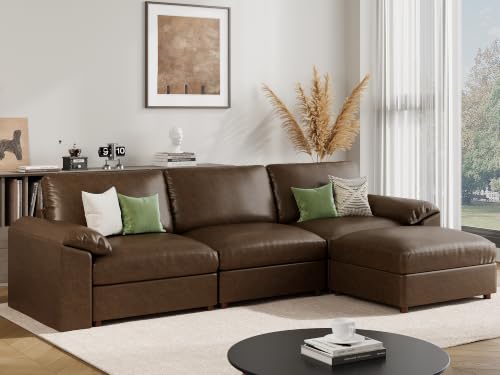
EASE MOOSE Leather Sectional Couch, Modular Sectional Sofa, Deep Brown | Pet-Friendly Faux Leather, Large Deep Seat, Easy to Clean, Solid Wood Frame ,Easy Assembly, Scratch Resistant
Check price on Amazon