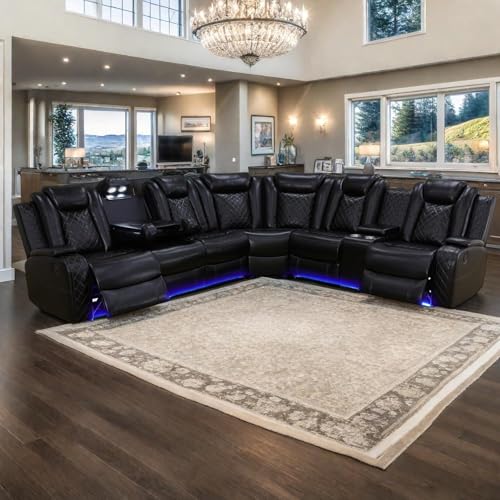
What Is a Leather Sectional Sofa with Chaise and Recliner?
A leather sectional sofa with chaise and recliner is a multi-piece seating system that merges three popular furniture concepts into one cohesive unit. The sectional layout provides corner seating and maximizes room usage. The chaise extension offers a built-in lounging area where you can stretch your legs without a separate ottoman. The recliner mechanism — either manual or power — allows one or more seats to recline backward for deep relaxation.
When these three features come together in a single leather-upholstered piece, you get a seating solution that works equally well for everyday family living, movie nights, and entertaining guests. The leather upholstery adds a layer of durability and easy maintenance that fabric alternatives cannot match, making it a smart choice for busy households.
If you are still exploring broader configurations, our guide to the pure leather sectional sofa covers the fundamentals of sectional construction and layout planning before you commit to a reclining model.
Key Features to Evaluate Before Buying
Not all reclining sectionals are built to the same standard. Understanding the core components will help you separate quality construction from budget compromises.
Recliner Mechanism
Manual recliners use a lever or pull handle, while power recliners operate with a button or remote. Power models offer smoother motion and often include USB charging ports and adjustable headrests.
Chaise Orientation
Chaise sections can be left-facing or right-facing. Measure your room carefully to ensure the chaise extends in the direction that matches your layout and traffic flow.
Leather Grade
Full-grain and top-grain leather offer the best durability and natural patina. Bonded leather is more affordable but less resilient over time.
Frame Construction
Kiln-dried hardwood frames resist warping and last longest. Plywood and engineered wood are common in mid-range models but may flex over time.
Cushion Fill
High-resilience foam retains shape well. Down-filled cushions feel luxurious but require more frequent fluffing and maintenance.
Clearance Requirements
Reclining seats need 6 to 12 inches of wall clearance. Power models with wall-hugger design reduce this requirement significantly.
For a deeper dive into leather grades and their long-term performance, see our comparison of full-grain leather sofa versus top-grain leather sofa options.
How to Choose the Right Size and Layout
Size is the single most common source of buyer regret with reclining sectionals. A piece that looks perfect in the showroom can overwhelm a living room once the recliners are fully extended.
Measure Your Space Carefully
- Room dimensions: Most leather sectionals with chaise and recliner require a room at least 12 x 12 feet. Smaller rooms may need a petite leather sofa or a more compact configuration.
- Recliner clearance: Add 6 to 12 inches behind the sofa for reclining space. Wall-hugger recliners need as little as 2 to 4 inches.
- Chaise extension: The chaise adds 24 to 36 inches of depth. Ensure this does not block walkways or doorways.
- Traffic flow: Leave at least 18 inches of walking space between the sofa and other furniture.
Popular Configurations
Reclining leather sectionals come in several standard layouts. An L-shaped configuration with a chaise on one end and a recliner on the other is the most popular for family rooms. U-shaped layouts offer more seating but require significantly more floor space. For smaller living areas, a leather corner sectional sofa with a single recliner may be the better fit.
If you are working with a narrow room, consider a leather corner recliner sofa that maximizes corner space without extending too far into the room. For larger spaces, a 8-piece leather sectional sofa provides expansive seating for the whole family.
Leather Types and Their Impact on Comfort and Durability
The leather you choose affects how the sofa feels, how it ages, and how much maintenance it requires. Here is a practical breakdown:
| Leather Type | Durability | Feel | Maintenance | Price Range |
|---|---|---|---|---|
| Full-Grain | Excellent | Natural, firm | Low | $2,000–$5,000+ |
| Top-Grain | Very Good | Smooth, soft | Low | $1,500–$3,500 |
| Split-Grain | Good | Firmer | Moderate | $1,000–$2,000 |
| Bonded Leather | Fair | Uniform | High | $600–$1,200 |
For a reclining sectional that will see daily use, full-grain or top-grain leather is the better investment. These materials develop a rich patina over time and resist cracking and peeling far better than bonded alternatives. If you are comparing options, our guide to leather types for sofa construction explains the tanning and finishing processes in detail.
Manual vs. Power Recliner: Which Is Right for You?
This is one of the most important decisions you will make. Both options have distinct advantages.
Manual Recliners
Manual recliners use a lever or pull handle to release the footrest and recline the backrest. They are typically $200 to $500 less expensive than power models, have fewer electronic components that can fail, and require no electrical outlet nearby. However, they offer limited positioning options — usually just fully upright or fully reclined.
A brown leather manual recliner sofa is a solid choice for guest rooms or spaces where the recliner will not be used daily.
Power Recliners
Power recliners operate with a button or remote and offer infinite positioning between upright and fully reclined. Many models include power headrests, USB charging ports, and even built-in LED lighting. The trade-off is higher cost and the need for a nearby power source.
For a premium experience, consider a leather power reclining sofa with power headrest that lets you adjust both the backrest and headrest independently. A leather power recliner sofa set often includes matching pieces for a cohesive living room look.
Color and Style Considerations
Leather sectionals with chaise and recliner are available in a wide range of colors and finishes. The right choice depends on your existing decor, lighting, and lifestyle.
- Neutral tones: Taupe leather sectional sofa and beige leather sectional sofa options blend easily with most color schemes and hide minor wear well.
- Dark tones: A black leather sectional sofa with recliner makes a bold statement and is exceptionally easy to maintain.
- Warm tones: Light brown leather sectional sofa and caramel leather sofa finishes add warmth and pair beautifully with wood floors.
- Statement colors: A green leather sectional sofa or white leather L-shape sofa can serve as a striking focal point in a minimalist room.
If you prefer a more classic look, a modern Chesterfield leather sofa with reclining functionality combines traditional elegance with contemporary comfort. For a softer, more relaxed aesthetic, consider a squishy leather sofa that prioritizes plush comfort over structured lines.
Space Planning and Room Integration
A reclining sectional with chaise is a substantial piece of furniture. Planning its placement before purchase prevents costly layout problems.
Living Room Layouts
In an open-concept living room, position the chaise section toward the room's interior and the recliner toward the wall or a corner. This keeps the reclining mechanism from blocking traffic. If your room is on the smaller side, a leather apartment sofa with a single chaise may be more practical than a full sectional.
Pairing with Other Furniture
A leather sofa with matching ottoman can extend the chaise function or provide additional surface area. For rooms with hardwood or tile floors, a leather sofa with metal legs adds a modern industrial touch while keeping the piece easy to move for cleaning.
If you have pets, a leather sofa good for dogs is worth prioritizing — leather resists scratches and is far easier to clean than fabric upholstery.
Care and Maintenance for Long-Term Performance
Leather is durable, but it is not indestructible. Proper care extends the life of your sectional significantly.
- Clean weekly: Wipe down the leather with a dry microfiber cloth to remove dust and oils.
- Condition every 6 to 12 months: Use a leather conditioner to prevent drying and cracking, especially in dry climates.
- Keep out of direct sunlight: UV exposure fades leather over time. Use curtains or blinds to protect the sofa.
- Address spills immediately: Blot liquid spills with a clean cloth. Do not rub, as this can spread the stain.
- Rotate cushions: If your sectional has removable cushions, rotate them regularly to ensure even wear.
For more detailed care instructions, explore our leather sofa care and accessories hub and leather sofa repair and maintenance hub.
Budget Planning: What to Expect
Leather sectionals with chaise and recliner span a wide price range depending on materials, mechanism type, and brand.
- Entry-level ($800–$1,500): Bonded or split-grain leather, manual recliners, basic foam cushions. Suitable for light use.
- Mid-range ($1,500–$3,000): Top-grain leather, power recliners on some seats, better frame construction. Good balance of quality and value.
- Premium ($3,000–$6,000+): Full-grain leather, full power reclining with headrests, kiln-dried hardwood frames, high-resilience foam. Built for daily use and long-term durability.
If you are looking for deals, check our leather recliner sofa deals page for current promotions and clearance events.
Common Buying Mistakes to Avoid
- Not measuring the room: Always measure your space, including doorways and hallways, before ordering.
- Ignoring recliner clearance: Reclining seats need space behind them. Wall-hugger models solve this problem.
- Choosing bonded leather for daily use: Bonded leather peels and cracks faster than genuine leather. It is fine for occasional seating but not for a primary family sofa.
- Overlooking the chaise orientation: Left-facing and right-facing chaise sections are not interchangeable. Confirm the orientation matches your room layout.
- Forgetting about delivery and assembly: Large sectionals may require professional delivery and assembly. Factor this into your budget.
Frequently Asked Questions
What is a leather sectional sofa with chaise and recliner?
It is a multi-piece seating configuration that combines a sectional layout, an extended chaise lounge section for leg support, and at least one reclining seat that can be manually or electronically adjusted for relaxation.
How much space do I need for a leather sectional with chaise and recliner?
Most models require a room at least 12 x 12 feet to allow proper clearance for reclining mechanisms. Always add 6 to 12 inches behind the sofa for recliner clearance and ensure walkways remain unobstructed.
Is a leather sectional with chaise and recliner worth the investment?
Yes, for households that value comfort, durability, and multi-functional seating, a leather sectional with chaise and recliner offers excellent long-term value. Quality models can last 10 to 15 years or more with proper care.
Can I use a leather sectional with chaise and recliner in a small room?
It is possible but challenging. Look for compact models with a single recliner and a short chaise. Wall-hugger recliners reduce clearance requirements. A petite leather sofa or 60-inch leather sofa may be a better fit for very small spaces.
How do I clean and maintain a leather sectional with recliner?
Wipe the leather weekly with a dry microfiber cloth, condition every 6 to 12 months, keep it out of direct sunlight, and address spills immediately by blotting with a clean cloth. Avoid harsh chemicals and abrasive cleaners.
Ready to Find Your Perfect Leather Sectional?
Browse our curated selection of top-rated leather sectionals with chaise and recliner, hand-picked for quality, comfort, and value.
VIEW RECOMMENDED MODELS